
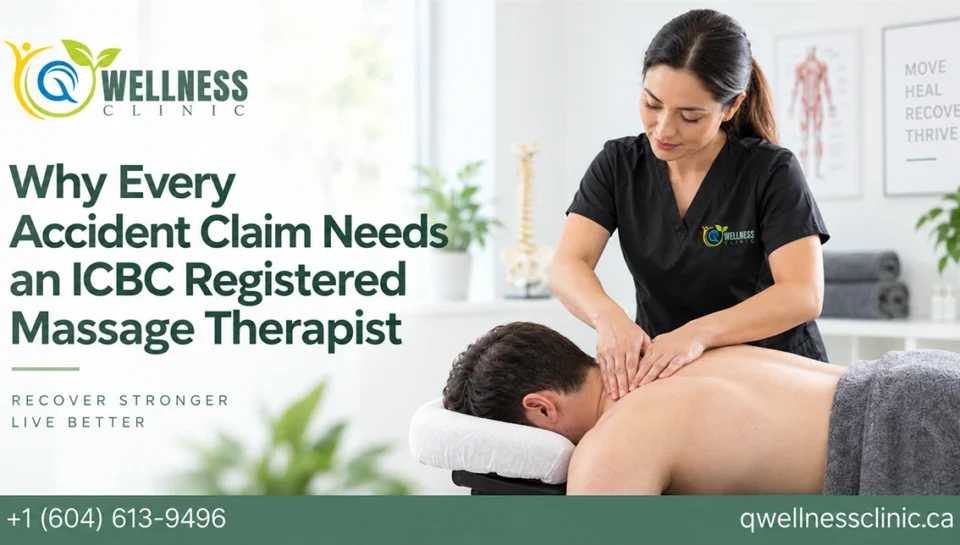
Why Every Accident Claim Needs an ICBC Registered Massage Therapist
 by admin
Getting into a car accident is stressful enough without having to figure out insurance paperwork on top of it. If you’re dealing with an ICBC claim right now, there’s a good chance someone told you to book massage therapy — but maybe you’re not totally sure why, or whether it even matters who you see. It does. Working with an icbc registered massage therapist isn’t just a formality. It genuinely changes how well and how fast you recover.
We see this play out at Q’s Wellness Clinic almost every week. Someone comes in weeks after their accident, still stiff, still in pain, because they figured they’d “wait it out” or booked a random massage place without realizing it wasn’t set up for ICBC. So let’s break down what actually matters here.
What Makes an Rmt Icbc Registered Anyway?
Not every massage therapist can bill ICBC. To become an icbc rmt, a therapist has to meet ICBC’s own requirements and get approved into their billing system. It sounds like a small technicality, but it isn’t.
A therapist who isn’t set up for this may not know how to document your injury the way ICBC expects, or how to write reports that keep your claim moving forward. An ICBC-registered therapist does this constantly — it’s just part of the job. So when you’re comparing clinics, this is the first thing to check.
Why Your Body Needs This, Not Just Your Claim?
Here’s something people don’t always realize: whiplash and soft tissue injuries often don’t hurt right away. You might walk away from the accident feeling okay, then wake up two or three days later barely able to turn your neck.
Massage therapy helps with the stuff that painkillers can’t really touch:
– Loosens muscles that have tightened up from the trauma
– Gets blood flowing to the injured area so it actually heals
– Breaks up scar tissue before it turns into long-term stiffness
– Calms down nerve pain that whiplash tends to cause
– Helps your body come down from that post-accident “fight or flight” state
We’ve had clients who pushed through the pain for months before finally coming in — and by then, what could’ve been a few weeks of treatment turned into a much longer recovery. Starting early with a registered massage therapist really does make a difference.
The Part Everyone Actually Cares About: Not Paying Out of Pocket
Let’s be honest — nobody wants another bill after an accident. This is where massage therapy icbc direct billing changes everything. When your clinic offers icbc direct billing rmt services, your sessions get billed straight to ICBC. No upfront payment, no chasing reimbursements, no keeping a shoebox of receipts.
At Q’s Wellness Clinic, we take care of all of that ourselves. Every appointment, every bit of rmt icbc direct billing paperwork — it’s on us, not you. If you’ve been typing icbc massage therapy near me into Google trying to find somewhere that just handles this properly, that’s the experience you should be getting.
So What Does Your Coverage Actually Look Like?
People assume ICBC coverage is complicated or that you need special sign-off before you can even start. Usually, that’s not the case. Your icbc massage therapy coverage typically kicks in right after your accident, and most people can begin their first several sessions without needing pre-approval.
That said, coverage isn’t identical for everyone. Some injuries need more sessions, some less. This is where it really helps to have a clinic that knows icbc rmt coverage well — because we’re the ones talking to your adjuster, sending progress notes, and making sure nothing about your file causes your treatment to get cut off early over paperwork.
Don’t Skip This Part: Post-Rehab Massage
A lot of people stop treatment the moment the sharp pain goes away, thinking they’re “done.” But tissue that’s still healing often needs more support even after it stops hurting constantly. That’s what icbc post rehab massage is for.
It helps with:
– Keeping old injuries from creeping back
– Maintaining the flexibility you worked to get back
– Avoiding new problems from compensating (like back pain from favouring one side for months)
– Letting your tissue fully finish repairing, not just mostly
If your doctor or physio has technically cleared you, but you still feel tight or “off,” a few more sessions with an RMT can genuinely close that gap.
Why the Clinic You Choose Actually Matters
Any massage clinic can hand you a hot towel and call it a day. Not every clinic knows how to actually handle an ICBC claim. You want a team that:
– Actually understands ICBC’s paperwork and timelines
– Handles direct billing without making you chase it
– Talks to your adjuster when it’s needed, not just when you ask
– Builds a plan around your specific injury, not a generic template
– Works alongside your physio, doctor, or counsellor instead of treating you in isolation
This is genuinely the whole reason Khalid Qasim built Q’s Wellness Clinic the way he did — massage therapy, physiotherapy, acupuncture, and counselling all under one roof, so your recovery doesn’t feel like five disconnected appointments with five different people who never talk to each other.
Ready to Start?
If your accident happened recently, don’t wait for the pain to get worse before booking. Getting in early with a real registered massage therapist can shave weeks off your recovery and stop small issues from becoming permanent ones.
Come in, and we’ll sort out your ICBC benefits, handle the direct billing, and build your treatment plan around what your body actually needs — not a one-size-fits-all script.
Frequently Asked Questions
Do I need a doctor’s referral before seeing an ICBC registered massage therapist?
Usually not. Most people can start massage therapy soon after their accident without a referral, though it can depend on the specifics of your claim.
How many sessions will ICBC actually cover?
It varies by injury. Most claims start with an initial batch of sessions, and more get added as your RMT reports on your progress.
Do I have to pay anything upfront?
No, not if your clinic offers direct billing. Your sessions get billed straight to ICBC, so there’s nothing coming out of your pocket.
What’s the real difference between a regular RMT and an ICBC RMT?
An ICBC RMT is specifically approved to bill ICBC and knows how to document things the way ICBC requires. A regular RMT might not have that setup at all.
Is massage still worth it once I’m feeling mostly better?
Yes — post-rehab massage helps prevent flare-ups and finishes off the healing that regular activity alone won’t fully take care of.
How do I find an ICBC massage therapist near me?
Look for a clinic that clearly advertises ICBC direct billing and confirm they’re currently taking new ICBC claims — that’s exactly what we do at Q’s Wellness Clinic.