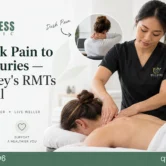


Deep Tissue Massage in Surrey: Benefits, What to Expect, and Yes, the Soreness Is Normal
 by admin
Ever had someone dig their thumbs into your shoulder and you actually flinched, but also kind of loved it? That’s deep tissue massage in a nutshell. At Q’s Wellness Clinic here in Surrey, it’s probably the treatment we talk about the most with new clients, mostly because people either love it, fear it, or have no idea what makes it different from a “normal” massage.
So let’s actually talk about it — what it is, who it’s for, what to expect when you book a session, and why you might feel like you did leg day after getting your back worked on.
So What Is Deep Tissue Massage, Really?
Here’s the simplest way to put it: a regular relaxation massage works on the surface. Deep tissue works underneath. Your therapist uses slower, firmer strokes to get into the muscle layers and the fascia (the connective tissue wrapped around your muscles) that a lighter massage just can’t reach.
If you’ve ever had a Swedish massage and thought “that felt nice, but the knot in my shoulder is still there,” that’s exactly the gap deep tissue fills. Swedish is about calming your nervous system. Deep tissue is about actually getting into the tension and working it out.
Who Actually Comes in for This
Honestly, it’s a much wider range of people than you’d think. We see:
Office workers whose necks and shoulders have basically fused into a permanent hunch. Tradespeople and delivery drivers with lower backs that feel like a brick. People coming out of car accidents who need ICBC massage therapy as part of getting back to normal. Athletes and gym regulars trying to keep old injuries from flaring up again. And a fair number of people who just say, “I hold all my stress right here,” and point at their neck.
If any of that sounds familiar, this is probably the treatment you need, not another spa massage that feels great for an hour and does nothing for the actual problem.
What You’ll Actually Get Out of It
The biggest thing clients notice is that the relief sticks. Because we’re working on the actual cause of the tightness instead of just smoothing over it, the results last longer than a lighter massage.
You’ll usually notice your movement opens up too — turning your head, bending down, reaching overhead, all of it gets easier once the muscle isn’t locked tight anymore. There’s also a real physical benefit here: working through stiff tissue improves blood flow, which helps your body heal faster in areas that have been tight or injured for a while.
And here’s something people don’t expect — even though the pressure is firm, most people still leave feeling noticeably calmer. Your body still gets that relaxation response, it just comes from a different kind of pressure.
If you’re recovering from something bigger, like a car accident or surgery, this is often a core part of getting your mobility back, which is why so many ICBC post rehab massage plans include it. And if tension has spread everywhere — neck, shoulders, lower back, all at once — a full body deep tissue massage means you’re not booking three separate appointments to deal with it.
What Actually Happens When You Come In
First time doing this? Here’s roughly how it goes.
Your therapist will sit down with you first and ask what’s going on — where it hurts, what happened, what you’re hoping the session does for you. This isn’t a formality, it actually shapes how they approach the session.
They won’t just go straight in at full pressure. Most therapists start lighter to warm the muscle up, then build pressure as your body starts to loosen. And a good therapist keeps checking in with you the whole time. If something feels like too much, say so. Deep doesn’t mean you should be gripping the table or holding your breath — that actually works against what the massage is trying to do.
Some spots will feel uncomfortable while they’re being worked on, especially the ones that have been tight for a while. That’s expected. It shouldn’t feel unbearable though, and there’s a real difference between the two. Most sessions run somewhere between 45 minutes and an hour, longer if you’re doing a full-body session or dealing with more than one problem area.
Okay, But Is It Normal to Be Sore After?
Yes. This is genuinely the question we get asked the most, so let’s be direct about it: feeling sore for a day or two afterward is completely normal. It’s honestly a lot like how you feel after a good workout — your therapist just worked through tissue that was tight, sometimes inflamed, and your body needs a bit of time to settle after that.
What that usually looks like: mild to moderate soreness for the first day or two, the treated area feeling a little tender if you press on it, maybe some stiffness when you wake up the next morning. It fades on its own, and a lot of people actually feel looser and better once it does.
To help it along, drink water, use a heating pad or take a warm bath if it’s tight, do some gentle stretching but skip the intense workout for a day. If there’s actual swelling or it feels more inflamed than sore, ice works better than heat.
One thing worth flagging honestly — if the pain is sharp, or it’s getting worse instead of better after a couple of days, that’s not normal post-massage soreness. Reach out to your therapist, don’t just wait it out.
Why It Matters That You See a Registered RMT
Deep tissue work isn’t something you want just anyone doing. Because you’re working through deeper muscle layers, your therapist needs to actually understand anatomy and injury patterns, and know how much pressure your specific body can handle.
That’s the whole reason a registered massage therapist matters here. RMTs go through real clinical training and are held to professional standards, which means the pressure and technique are adjusted for you, not applied the same way to everyone who walks in. So if you’re searching for a registered massage therapist near me, especially while dealing with an injury or an ICBC claim, going with a licensed RMT over an unlicensed provider isn’t just a nice-to-have, it actually matters for your recovery.
At Q’s, every therapist on our team is trained specifically in deep tissue work, and sessions are built around what your body needs that day, not a fixed script.
Looking for an RMT in Surrey?
If you’ve been searching RMT massage near me and you’re tired of massages that feel good for an hour but don’t actually change anything, come see us. We also handle ICBC massage therapy near me directly, meaning if you’re recovering from an accident, we bill ICBC directly so you’re not stuck paying upfront and chasing reimbursement afterward.
Quick Questions People Ask Us
Is deep tissue massage supposed to hurt?
It can feel intense in certain spots, but no, it shouldn’t be painful to the point where you’re tensing up or holding your breath. Tell your therapist if it’s too much — that’s normal to say.
How long does the soreness usually last?
Around 24 to 48 hours for most people, similar to how you’d feel after a solid workout. It should get better each day, not worse.
Can ICBC cover this?
Yes, deep tissue is commonly part of ICBC-approved treatment plans after a car accident. We offer direct billing so it’s one less thing to deal with.
How often should I actually be coming in?
Depends on what you’re dealing with. For chronic pain or recovery, weekly or every two weeks at first, then less often as things improve.
What’s the difference between this and a regular massage?
Regular massage relaxes you and works on the surface. Deep tissue gets into the actual muscle and fascia to deal with the root cause of chronic pain or tightness.