

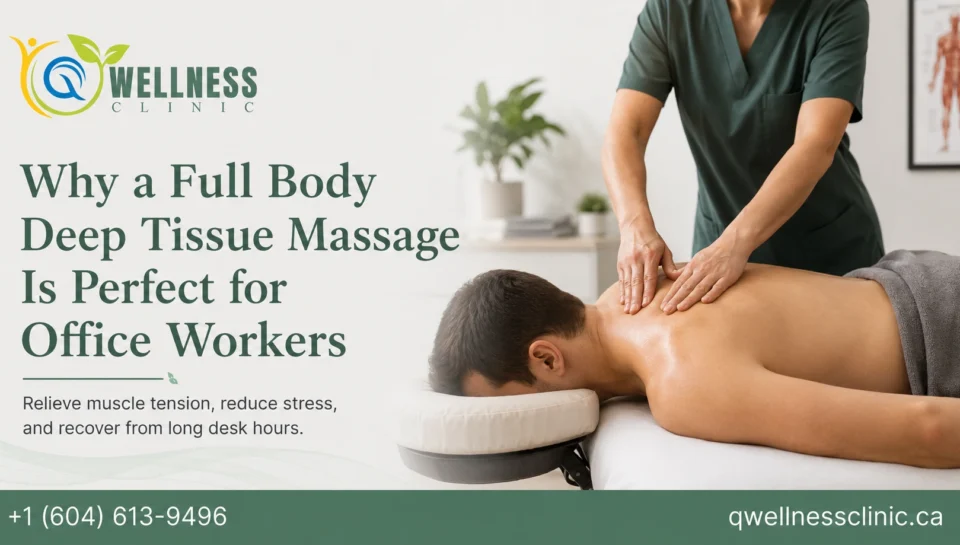
Why a Full Body Deep Tissue Massage Is Perfect for Office Workers
 by admin
If you spend your day sitting at a desk, staring at a screen, and typing away for hours, you already know the feeling. Your shoulders creep up toward your ears. Your lower back feels stiff the moment you stand up. Your neck cracks when you turn it. This isn’t just “part of the job” — it’s your body telling you something needs to change. At Q’s Wellness Clinic, we see this every single day, and a full body deep tissue massage is one of the most effective ways we help office workers in Surrey get real relief.
This isn’t about a quick, relaxing rubdown. Deep tissue work goes further, targeting the tight knots and tension that build up layer by layer in muscles that barely move all day except to type or scroll.
The Real Problem With Sitting All Day
Our bodies aren’t built to stay in one position for eight-plus hours. When you sit at a desk, your hip flexors shorten, your chest muscles tighten from hunching over a keyboard, and your upper back and neck muscles work overtime just to hold your head up. Over months and years, this creates patterns of tension that don’t just go away with a good night’s sleep or a stretch break.
That’s why so many people search for a full body massage near me after weeks of headaches, tight shoulders, or a nagging ache between the shoulder blades. It’s not random — it’s the direct result of desk posture, stress, and repetitive movement.
What Makes Deep Tissue Different
A regular massage works on the surface layers of muscle and is great for general relaxation. A deep tissue massage goes deeper, working through layers of muscle and connective tissue to release the tension sitting underneath. Our registered massage therapists use slower strokes and more focused pressure to reach the areas where stress and bad posture have really settled in — think neck, shoulders, upper back, and lower back.
The “full body” part matters too. Office tension rarely stays in one place. Tight hips from sitting can pull on your lower back. A stiff neck can lead to tension headaches. By treating the whole body instead of just one sore spot, a full body deep tissue massage addresses the whole chain of tension, not just the symptom you noticed first.
How It Helps Office Workers Specifically
1. Loosens tight shoulders and neck
This is the number one complaint we hear. Hours of looking at a screen and typing pull your shoulders forward and tighten the muscles at the base of your skull. Deep tissue work releases this tension so you can turn your head without that stiff, locked-up feeling.
2. Eases lower back pain
Sitting compresses your spine and weakens the muscles that support your lower back. A full body massage helps release tight hip flexors and glutes, which in turn takes pressure off your lower back.
3. Reduces tension headaches
A lot of headaches that people blame on screen time actually start in the neck and upper shoulders. When those muscles are tight, they refer pain up into the head. Loosening them can bring real relief.
4. Improves circulation
Sitting all day slows blood flow, especially to your legs and lower back. Deep tissue massage gets circulation moving again, which helps muscles recover and reduces that heavy, stiff feeling by the end of the day.
5. Helps you actually relax
Desk jobs come with deadlines, meetings, and mental fatigue. Physical tension and mental stress feed off each other. Working out the physical tension through massage often brings mental relief too — many clients tell us they sleep better after a session.
6. Supports better posture over time
While one massage won’t fix years of poor posture overnight, regular sessions help keep muscles loose and balanced, making it easier for your body to hold better posture naturally.
Why Surrey Office Workers Choose Us
If you’ve been typing full body massage Surrey or full body RMT near me into Google, we get it — commuting across town after a long workday isn’t appealing when your back is already sore. At Q’s Wellness Clinic, we’re conveniently located for people working around Surrey and the surrounding area, and our registered massage therapists understand the specific patterns that desk work creates.
We also offer direct billing for ICBC claims, so if your tension is related to an injury from a motor vehicle accident, that’s something we can help sort out too — no need to pay out of pocket and wait for reimbursement.
What To Expect During Your Visit
Before your full body RMT massage, your therapist will ask a few quick questions about where you’re feeling tight, any pain points, and your general activity level. This helps them focus pressure where you need it most while still covering the whole body.
During the session, expect firmer pressure than a relaxation massage. It shouldn’t be painful, but you may feel some intensity as your therapist works through tight areas — that’s normal and a sign the tension is actually being released. Afterward, many people feel looser immediately, with the full benefits — like reduced stiffness and better sleep — building over the next day or two.
We always recommend drinking water after your session and giving your body a little time to rest, since deep tissue work can leave muscles feeling slightly tender for a day, similar to how you’d feel after a good workout.
How Often Should Office Workers Get a Massage?
There’s no single right answer, since it depends on how much tension you’re carrying and your budget. That said, many of our clients who sit at a desk full-time find that a full body massage every three to four weeks keeps tension from building back up to uncomfortable levels. If you’re dealing with chronic pain, more frequent visits at the start can help get things under control before spacing sessions out.
Frequently Asked Questions
Is deep tissue massage painful?
It can feel intense in tight areas, but it shouldn’t be sharp or unbearable pain. Tell your therapist if the pressure feels like too much — they’ll adjust it.
How long does a full body deep tissue massage take?
Most sessions run 60 to 90 minutes, giving your therapist enough time to properly work through the neck, shoulders, back, hips, and legs.
Can I get this covered by insurance?
Many extended health plans cover registered massage therapy. If your tension is from a car accident, we also offer direct billing to ICBC.
Will one session fix my back pain?
One session can bring noticeable relief, but lasting change usually comes from a few regular sessions combined with better desk habits, like getting up to stretch every hour.
What should I wear to my appointment?
You’ll undress to your comfort level and be properly draped throughout the session. Your therapist will only uncover the area they’re actively working on.
Book Your Full Body Deep Tissue Massage Today
If your desk job has left you stiff, sore, and stressed, you don’t have to just live with it. At Q’s Wellness Clinic in Surrey, our registered massage therapists are ready to help you loosen up, feel better, and get back to your day without that heavy, tense feeling weighing you down. Book your full body deep tissue massage with us today and give your body the reset it’s been asking for.